India
Parks: Ranthambore, Bandhavgarh, Kanha · best months March, April, May, June, October, November (March to November)
Jan
Feb
Mar
Apr
May
Jun
Jul
Aug
Sep
Oct
Nov
Dec
Animals · Tropical rainforest · 2026
Updated September 8, 2026 · Plan your trip
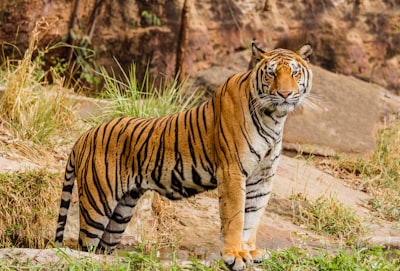
Tigers are solitary and territorial, so a sighting costs on average 4 to 6 safaris. Book morning plus afternoon in the same zone and pick a lodge that uses fixed drivers with trackers. Ranthambore zones 1 to 5 historically have the most sightings, Bandhavgarh’s Tala zone is the most densely populated.
The Bengal tiger is the shyest big predator to spot and therefore the most rewarding sighting. Ranthambore and Bandhavgarh hold India’s highest densities and run a strict zone system with a limited number of jeeps per zone. March to June gives the best chance because tigers then come daily to the few remaining waterholes.
Endangered. About 5,500 wild tigers worldwide, of which about 3,600 in India.
Parks: Ranthambore, Bandhavgarh, Kanha · best months March, April, May, June, October, November (March to November)
Dust and hard light dominate in April and May. Set the white balance manually and keep 100 to 400 mm ready; sightings often happen at 30 to 80 meters.
Limited suitability. Safaris are dusty and hot; many parks refuse children under 5. From 8 years it works fine.
Combines with leopard, sloth bear, wild dog and more than 300 bird species. A real combination trip with African species does not exist; pick per continent.
Readers support Animals Around the World when you book through these partners, at no extra cost to you. Read how affiliate works.
Best for safari
Safaribouwer (example)
Puts together your Botswana or Tanzania route with local guides.
! Watch out: prices shift per season, always ask for a detailed quote.
Best for flights
Ticketzoeker (example)
Compares flights to safari hubs like Maun and Kilimanjaro.
! Watch out: check baggage rules for charter flights separately.
Best for activities
Tourplatform (example)
Books whale watching or day tours with free cancellation.
! Watch out: always check the cancellation terms per provider.
Ranthambore and Bandhavgarh in India. In high season both parks report sightings on about 60 to 70 percent of safaris for multi-day visits in a fixed zone.
March to June for the highest odds at waterholes, October and November for green scenery and less heat. Parks largely close from July to September for the monsoon.
Plan at least 6 to 8 safaris spread over 4 days. On average the first sighting falls on day 2 or 3 with a good tracker.
As an indication, 2,800 to 4,500 euros per person for 10 days including flights, 6 to 8 jeep safaris and mid-range lodges.
In a jeep with guide and ranger the risk is negligible. Tigers avoid vehicles. Going on foot is forbidden in core zones.
Nepal (Chitwan, Bardia) is a good alternative with lower prices. Bhutan, Thailand and Indonesia have lower densities and a smaller chance.
Parks are divided into zones, each with a maximum number of jeeps per shift. You book a zone per safari. Fixed zones over several days raise the odds because the tracker learns the territory.
No. Only registered jeeps with a driver and a compulsory ranger may enter the core zones.
Last updated: September 8, 2026. All sighting chances, months and prices are indications based on public sources, not travel advice and no guarantee. Always check your government’s current travel advisory before departure.